
Explanation of the Coping Cards
If you have just purchased your Coping Skills cards, you can access a three-month free subscription. WhatsApp Jath to claim your benefit.
INDEX
- ACTIVITY 1 | The Heart Smile Exercise
- ACTIVITY 2 | H.A.L.T.
- ACTIVITY 3 | What Inspires Me Today?
- ACTIVITY 4 | The S.T.O.P. Skill
- ACTIVITY 5 | Be The S.T.A.R. In Your Relationship
- ACTIVITY 6 | How To S.T.O.P.P. Conflict
- ACTIVITY 7 | Five Areas Of Emotional Intelligence
- ACTIVITY 8 | Seven Roots Of Unment Needs
- ACTIVITY 9 | Problem Solving
- ACTIVITY 10 | Relive A Memorable Moment
- ACTIVITY 11 | A.C.E. Activity
- ACTIVITY 12 | My Wheel Of Life
- ACTIVITY 13 | Time Management
- ACTIVITY 14 | Trigger Management
- ACTIVITY 15 | My Bucket List
- ACTIVITY 16 | Coping Skills
- ACTIVITY 17 | How to Empower Yourself
- ACTIVITY 18 | My Thought Of The Day
- ACTIVITY 19 | Skills For Better Self-care
- ACTIVITY 20 | What Was My Highlight Today?
- ACTIVITY 21 | B.R.E.A.T.H.E.
- ACTIVITY 22 | Setting S.M.A.R.T. Goals
- ACTIVITY 23 | Emotional Resilience
- ACTIVITY 24 | What Did I Learn Today?
- ACTIVITY 25 | Grounding Myself
- ACTIVITY 26 | My Main Reason For Being Grateful Today
- ACTIVITY 27 | Things That I Need To Avoid To Stay Well
- ACTIVITY 28 | I.M.P.R.O.V.E. Yourself
- ACTIVITY 29 | Setting Boundaries C.L.E.A.R.
- ACTIVITY 30 | C.A.L.M. For Anger Management
- ACTIVITY 31 | Avoid Misunderstandings
- ACTIVITY 32 | The Sandwich Communiction Strategy
- ACTIVITY 33 | S.E.L.F. Strategy
- ACTIVITY 34 | P.E.A.C.E. Strategy
- ACTIVITY 35 | R.E.S.T. Strategy
- ACTIVITY 36 | F.R.E.E.D.O.M. to break up a toxic relationship
- ACTIVITY 37 | A.C.T. Strategy
- ACTIVITY 38 | A.C.C.E.S.S. your wise mind
ACTIVITY 1 | The Heart Smile Exercise

The “Heart Smile” technique is a powerful tool to cultivate positivity and emotional well-being. This practice involves starting a genuine and warm smile from the heart, not just on the face. Begin by taking a moment to breathe deeply and center yourself. As you exhale, envision a radiant, heartwarming smile spreading from within and emanating outward. Feel the warmth and joy associated with a heartfelt smile permeate your entire being.
Now, think about something that makes your heart smile deeply. Reinforce the warm smile. Whether facing a challenge or celebrating success, the Heart Smile technique encourages a compassionate and optimistic perspective.
This activity is also included in the Journal that you can order from our online store.
ACTIVITY 2 | H.A.L.T.

Here are four of the main triggers that can weaken your resistance. Whenever you feel hungry, angry, lonely, or tired, you may be in a vulnerable unsafe space. This vulnerability has the potential to break down your resistance. Use this acronym to mindfully identify these feelings immediately whereafter you take the necessary corrective steps.
Following this tracking, take immediate steps to bring alleviation.
ACTIVITY 3 | What Inspires Me Today?

Be mindful and aware of things happening to you during the day that inspire you. Note it down. See how you can experience these inspirational moments more often.
This observing activity is also included in the Journal that you can order from our online store.
ACTIVITY 4 | The S.T.O.P. Skill

Use these steps to gain perspective when facing a highly challenging situation. You learn to breathe deeply from your diaphragm through your nostrils, remove yourself physically or mentally from the situation for a while, without responding, then observe what is going on and proceed mindfully with your wise mind. This skill helps with impulsive behaviour, intrusive thoughts, or whenever you feel pressured.
S – Stop: When you feel the urge to act impulsively, pause. Just stop for a moment. This simple act interrupts the automatic response and gives you a chance to reconsider.
T – Take a Breath: Take a deep breath. It might seem basic, but deep, mindful breathing helps calm your nervous system. Inhale slowly, hold it for a few seconds, and exhale. Feel the sensations in your body as you breathe.
O – Observe: Step back and observe what’s happening within you. What thoughts and feelings are present? Identify the triggers that may be influencing your impulsive reaction. Awareness is the first step to change.
P – Proceed Mindfully: After stopping, breathing, and observing, proceed mindfully. Make a conscious choice about how to respond. Consider the consequences of your actions and choose a response aligned with your values and goals
ACTIVITY 5 | Be the S.T.A.R. in your relationship

The STAR Principle, encompassing Security, Trust, Acceptance, and Respect, provides a comprehensive framework for building and maintaining healthy and effective relationships. Use this framework to guide you in relationship building, marriage counselling, and bonding with someone close to you.
SECURITY:
- Emotional Safety: Foster an environment where individuals feel emotionally secure to express themselves without fear of judgment or criticism.
- Predictability: Provide a sense of stability and predictability in relationships, ensuring that actions and responses are consistent.
- Reliability: Demonstrate dependability and reliability, building a foundation of trust by consistently meeting commitments.
TRUST:
- Honesty and Transparency: Be open and honest in communication, avoiding deception and fostering a transparent relationship.
- Consistency: Demonstrate reliability and consistency in actions and behaviours, building confidence in the relationship.
- Accountability: Take responsibility for your actions, acknowledging mistakes, and working to rectify them to build and maintain trust.
ACCEPTING:
- Non-Judgmental Attitude: Embrace a non-judgmental approach, accepting individuals for who they are without imposing personal biases.
- Empathy: Understand and share the feelings of others, demonstrating empathy and a willingness to see things from their perspective.
- Inclusivity: Foster an inclusive environment where differences are acknowledged, respected, and celebrated.
RESPECT:
- Communication: Use respectful and constructive communication, avoiding offensive language or behaviours.
- Recognition of Boundaries: Acknowledge and respect personal boundaries, ensuring that everyone’s limits are honoured.
- Valuing Differences: Appreciate and value the diversity of opinions, perspectives, and backgrounds, promoting a culture of mutual respect.
ACTIVITY 6 | How To S.T.O.P.P. Conflict

Use this acronym to steer you out of a conflict situation. Firstly, stop whatever you are doing and say nothing. Take a deep breath and observe what is going on. Then pull back to gain perspective, see the bigger picture, make sure you differentiate between a fact and an opinion, get someone else’s perspective, and finally, followed by applying the wisest option.
ACTIVITY 7 | Five Areas Of Emotional Intelligence

Daniel Goleman is often credited with popularizing the concept of emotional intelligence, and he identified five key components of emotional intelligence. Here they are, along with three bullet points under each area:
Self-Awareness:
- Recognition of Emotions: Being aware of one’s own emotions and understanding their impact on thoughts and behavior.
- Accurate Self-Assessment: The ability to realistically and accurately assess one’s own strengths and weaknesses.
- Emotional Self-Awareness: Recognizing a wide range of emotions and understanding their nuances.
Self-Regulation:
- Emotional Control: Managing and regulating one’s own emotions in various situations.
- Adaptability: Flexibility in handling change and challenges without being overwhelmed by emotional reactions.
- Conscientiousness: Acting with integrity, being responsible, and demonstrating self-discipline.
Motivation:
- Achievement Drive: Striving for personal improvement and the desire to meet challenging goals.
- Commitment: Persistence in the face of setbacks and the ability to stay motivated in pursuit of long-term objectives.
- Initiative and Optimism: Taking the initiative to achieve goals and maintaining a positive outlook despite obstacles.
Empathy:
- Understanding Others: The ability to comprehend and share the feelings of others.
- Developing Others: Recognizing the potential in others and fostering their development and success.
- Service Orientation: Anticipating, recognizing, and meeting others’ needs, even before they express them.
Social Skills:
- Effective Communication: Clear and articulate communication, both verbal and non-verbal.
- Conflict Resolution: The ability to manage and resolve conflicts constructively and diplomatically.
- Building Relationships: Establishing and maintaining positive relationships, including networking and team collaboration.
These five components collectively form the framework of emotional intelligence, emphasizing the importance of understanding and managing one’s own emotions while also navigating the complexities of social interactions.
Click here to test your level of Emotional Intelligence.
ACTIVITY 8 | Seven roots of unmet needs

The concept of the seven roots of emotional unmet needs is often associated with Marshall Rosenberg’s Nonviolent Communication (NVC) framework. The seven roots are:
Recognition:
- The need to be acknowledged, seen, and validated for one’s feelings, thoughts, and actions.
- Seeking acknowledgment for one’s contributions and existence.
- Desiring understanding and recognition of one’s identity.
Safety and security:
- The need for physical and emotional safety.
- Seeking an environment free from harm or threat.
- Desiring stability and predictability in relationships.
Autonomy:
- The need for independence and the ability to make choices.
- Seeking freedom to make decisions and pursue one’s goals.
- Desiring control over one’s life and circumstances.
Empathy:
- The need for understanding and connection with others.
- Seeking to be heard and empathized with in times of joy or distress.
- Desiring a sense of shared understanding and emotional connection.
Quality of Connection:
- The need for meaningful and authentic relationships.
- Seeking deep and genuine connections with others.
- Desiring relationships built on trust, respect, and mutual understanding.
Play:
- The need for light-heartedness, spontaneity, and enjoyment.
- Seeking opportunities for fun, creativity, and playfulness.
- Desiring a balance between work and leisure.
Meaning and Purpose:
- The need for a sense of purpose and contribution.
- Seeking meaning and fulfillment in one’s activities and relationships.
- Desiring a connection to something greater than oneself.
ACTIVITY 9 | Problem solving

Use this card to work through problems in any dimension of your Wheel of Life.
Articulate the Problem:
- Clearly define and describe the issue or challenge.
- Identify the specific factors contributing to the problem.
- Ensure that the problem is stated in a neutral and objective manner.
Generate Possible Solutions:
- Brainstorm a variety of potential solutions without immediate judgment.
- Encourage creativity and explore both conventional and unconventional options.
- Consider the feasibility, resources, and potential outcomes of each solution.
Evaluate and Choose the Best Option:
- Assess the advantages and disadvantages of each potential solution.
- Prioritize options based on their feasibility, effectiveness, and alignment with goals.
- Consider potential risks and consequences associated with each choice.
Implement the Chosen Solution:
- Develop a clear and actionable plan for implementing the selected solution.
- Assign responsibilities and allocate necessary resources.
- Anticipate potential challenges and create contingency plans.
Review and Learn from the Outcome:
- Evaluate the results of the implemented solution against the initial problem.
- Identify lessons learned and areas for improvement in the problem-solving process.
- Use feedback and insights gained to enhance future decision-making.
ACTIVITY 10 | Relive a memorable moment

Use this activity to mindfully appreciate and become aware of every moment. Here, you select a memorable moment that will bring you peace or joy.
This activity is also included in the Journal that you can order from our online store.
ACTIVITY 11 | A.C.E. Activity

The A.C.E. principle, encapsulating Achieve, Connect, and Enjoy, serves as a holistic framework for cultivating a well-balanced and fulfilling life.
- By emphasizing achievement, you are encouraged to set meaningful goals, and build personal growth and a sense of accomplishment.
- The Connect aspect underscores the importance of building positive relationships and promoting empathy, collaboration, and a sense of belonging.
- Simultaneously, the Enjoy component emphasizes mindfulness, the pursuit of hobbies, and the celebration of successes, contributing to a life rich in joy and satisfaction.
Integrating these principles creates a harmonious lifestyle that not only propels personal and professional success but also nurtures meaningful connections and cultivates a genuine appreciation for life’s experiences, ultimately leading to a more fulfilling and purpose-driven existence.
Achieve:
- Goal Setting: Setting and working towards achievable goals provides a sense of purpose and direction.
- Personal Growth: Continuous learning and development contribute to a fulfilling and meaningful life.
- Productivity and Success: Accomplishments and success in various areas contribute to overall well-being and satisfaction.
Connect:
- Social Relationships: Building and maintaining positive relationships with others fosters a sense of belonging.
- Empathy and Understanding: Connecting emotionally with others promotes empathy and understanding.
- Collaboration: Working together with others in various aspects of life enhances personal and collective achievements.
Enjoy:
- Mindfulness and Presence: Being present in the moment and savoring experiences enhances overall enjoyment.
- Hobbies and Recreation: Engaging in activities that bring joy and relaxation contributes to a balanced lifestyle.
- Celebrating Success: Taking time to celebrate achievements and milestones adds to the enjoyment of the journey.
ACTIVITY 12 | My Wheel of Life

This card serves as a reminder to maintain a healthy balance between the various dimensions of your life. To make sure that you maintain balance, regularly complete the Wheel of Balance questionnaire.
ACTIVITY 13 | Time Management

Based on the Eisenhower Matrix Model, this time management model helps you decide on and prioritize tasks by urgency and importance, sorting out less urgent and important tasks that you should either delegate or not do at all.
DO:
- Priority Focus: Concentrate on tasks that are both urgent and important, addressing immediate concerns.
- Decision-Making: Make decisive choices about tasks that align with overall goals and contribute significantly to productivity.
- Proactive Approach: Take a proactive stance in tackling tasks, preventing them from becoming more time-consuming or stressful.
DIARISE:
- Time Blocking: Allocate specific time slots in your schedule for tasks that are important but not necessarily urgent.
- Planning Ahead: Schedule future activities, deadlines, or important events to ensure preparedness and avoid last-minute stress.
- Strategic Timing: Choose optimal times for activities, considering energy levels and peak focus periods.
DELEGATE:
- Task Assessment: Evaluate tasks to identify those that can be effectively delegated without compromising quality.
- Clear Communication: Clearly communicate expectations and requirements when assigning tasks to others.
- Trust Building: Foster a sense of trust and collaboration by delegating responsibilities to capable and motivated team members.
DROP:
- Non-Essential Elimination: Identify and eliminate tasks that neither contribute significantly nor align with overarching goals.
- Saying No: Develop the ability to decline tasks or commitments that don’t align with priorities.
- Resource Conservation: Save time and energy by consciously deciding not to engage in tasks that provide little value.
Utilizing the Eisenhower Matrix with these skills will help you manage your time effectively by prioritizing, planning, delegating, and eliminating tasks based on your urgency and importance.
ACTIVITY 14 | Trigger Management

This activity guides you through the process of managing emotional triggers effectively, especially when struggling with anxiety, anger management problems, post-traumatic stress disorder, and depression.
This activity is also included in the Journal that you can order from our online store.
Describing the Trigger Event:
- Identify Specifics: Clearly define the trigger event by pinpointing the specific circumstances, actions, or words that led to the trigger.
- Contextual Understanding: Consider the context surrounding the trigger, including past experiences or external factors that may contribute.
- Objectivity: Strive for an objective description, avoiding judgment or assumptions about the trigger event.
Your Immediate Physical, Emotional, and Behavioral Response:
- Awareness: Acknowledge and become aware of your immediate physical sensations, such as tension, rapid heartbeat, or shallow breathing.
- Emotional Recognition: Identify the emotions triggered, whether it’s frustration, anger, sadness, or anxiety.
- Behavioral Observation: Note any impulsive or automatic reactions, such as withdrawing, lashing out, or engaging in negative self-talk.
The Best Coping Skill:
- Mindfulness and Breathing: Practice mindfulness and deep breathing to stay present and regulate your immediate physical and emotional responses.
- Pause and Reflect: Take a moment to pause before reacting, giving yourself time to assess the situation and choose a thoughtful response.
- Cognitive Restructuring: Challenge and reframe negative thoughts associated with the trigger, promoting a more balanced and constructive perspective.
By following these steps and incorporating the corresponding coping skills, individuals can enhance their ability to manage triggers effectively, fostering emotional resilience and healthier responses to challenging situations.
ACTIVITY 15 | My Bucket List

Name one thing that you would like to add to your bucket list.
A bucket list exercise holds significant value as it serves as a powerful tool for personal growth, motivation, and a sense of fulfillment.
- Firstly, it encourages individuals to reflect on their aspirations, dreams, and long-term goals, fostering a deeper understanding of what truly matters to them. This process aids in clarifying priorities and establishing a sense of purpose.
- Secondly, a bucket list inspires motivation by turning abstract aspirations into tangible goals, creating a roadmap for achievement. It instils a sense of excitement and purpose, propelling individuals to take proactive steps toward realizing their dreams.
- Lastly, the exercise contributes to a fulfilling life by promoting experiences and activities that align with personal values and desires. Checking items off the bucket list provides a sense of accomplishment, creating lasting memories and a richer, more satisfying life journey. Overall, the bucket list exercise is a valuable tool for cultivating self-awareness, motivation, and a life filled with meaningful experiences.
This activity is also included in the Journal that you can order from our online store.
ACTIVITY 16 | Coping Skills

These six sets of coping skills will steer you through challenging situations in your life. They also form the basis for effective trigger management. Go to the Coping Skills section, listen to the podcasts, and start practicing these skills.
ACTIVITY 17 | How to empower yourself

Apply the principles of this card when you either need to take back your powers and authority or have the desire to reinvent yourself. Our podcast series on Personal Transformation will guide you through this journey.
The purpose of self-empowerment is to enable individuals to take control of their lives, make informed choices, and develop the confidence and resilience needed to navigate challenges effectively. Empowering oneself involves recognizing one’s strengths, setting and achieving personal goals, and fostering a positive mindset. The benefits of self-empowerment are manifold:
- Increased Confidence: Self-empowerment builds confidence by acknowledging personal abilities and accomplishments, allowing individuals to face challenges with a positive attitude.
- Resilience in Adversity: Empowered individuals develop resilience, the ability to bounce back from setbacks, and navigate difficulties with a sense of determination.
- Personal Growth: Through self-empowerment, individuals engage in continuous self-improvement, learning, and personal development, leading to a more fulfilling and meaningful life.
- Autonomy and Independence: Empowerment encourages autonomy, enabling individuals to make independent decisions and take responsibility for their choices and actions.
- Improved Mental Well-Being: Empowered individuals often experience reduced stress and improved mental health, as they feel more in control of their lives and better equipped to manage challenges.
- Enhanced Decision-Making: Self-empowerment involves developing critical thinking skills and the ability to make well-informed decisions, contributing to a more successful and fulfilling life.
- Positive Relationships: Empowered individuals often form healthier and more positive relationships, as they bring a sense of self-assuredness and authenticity to their interactions with others.
- Goal Achievement: Self-empowerment facilitates goal setting and achievement, providing a roadmap for personal and professional success.
- Increased Motivation: Empowered individuals are often more motivated; driven by a sense of purpose and the belief that they have the capacity to create positive change in their lives.
- Contribution to Society: Empowered individuals are more likely to contribute positively to their communities and society, as they bring their strengths and abilities to collective efforts.
In essence, self-empowerment is about taking charge of one’s life, fostering personal growth, and creating a positive, purposeful existence with a broader impact on both the individual and the community.
ACTIVITY 18 | My thought of the day

Reflect on what is my special quote, verse, or nugget of wisdom for today. Another mindfulness practicing tool.
This activity is also included in the Journal that you can order from our online store.
ACTIVITY 19 | Skills for better self-care

- CHECK
- CHALLENGE
- CHANGE
Apply these skills as a reminder to mindfully take diligent care of yourself. Make the necessary amends if you have neglected yourself, whether it be through sleep deprivation, boundary violations, financial mismanagement, not eating correctly, or ignoring your basic needs to the detriment of something else.
ACTIVITY 20 | WHAT was my highlight today?

Use this reflective tool to mindfully record and appreciate your daily highlights. This tool helps you to acknowledge the progress you are making. As a tie management tool, it makes you aware of the beautiful things that happening that add value to your life.
This activity is also included in the Journal that you can order from our online store.
ACTIVITY 21 | B.R.E.A.T.H.E.

The B.R.E.A.T.H.E. activity is a valuable mindfulness practice that offers many benefits for mental well-being and stress reduction:
- Body Awareness: The B.R.E.A.T.H.E. acronym stands for “Breathe, Reflect, Enquire, Attend, Take a Halt, and Examine.” By focusing on each element, individuals develop heightened body awareness, paying attention to the sensations and movements associated with breathing. This increased awareness can foster a deeper connection between the mind and body.
- Stress Reduction: Mindful breathing, which is a central component of the B.R.E.A.T.H.E. activity, is known to activate the body’s relaxation response. Regular practice helps reduce stress by calming the nervous system, lowering cortisol levels, and promoting a sense of tranquillity.
- Emotional Regulation: The reflective and enquiring aspects of the activity encourage individuals to observe and understand their emotions without judgment. This process contributes to emotional regulation, allowing individuals to respond more thoughtfully to challenging situations.
- Attention and Focus Improvement: The attention and focus components of B.R.E.A.T.H.E. involve directing focus deliberately to the present moment. This practice helps improve concentration and attention span, enhancing cognitive performance in daily activities.
- Time for Self-Reflection: The “Take a Halt” and “Examine” components prompt individuals to pause and reflect on their thoughts and feelings. This intentional self-reflection can lead to insights, self-discovery, and a better understanding of personal needs and values.
- Mind-Body Connection: The activity emphasizes the integration of the mind and body through mindful breathing. This connection promotes a holistic approach to well-being, recognizing the intricate relationship between mental and physical health.
- Increased Resilience: Regular practice of the B.R.E.A.T.H.E. activity cultivates mindfulness as a habitual response to stressors. This, in turn, contributes to increased resilience— the ability to bounce back from challenges with greater ease and adaptability.
- Enhanced Present-Moment Awareness: The overarching goal of the B.R.E.A.T.H.E. activity is to bring individuals into the present moment. This heightened awareness of the “now” allows them to let go of distractions and worries about the past or future, fostering a sense of peace and contentment.
In summary, the B.R.E.A.T.H.E. activity is a comprehensive mindfulness practice that combines breath awareness, self-reflection, and intentional attention to enhance overall well-being. By incorporating these elements, individuals can develop valuable skills for managing stress, improving emotional regulation, and cultivating a greater sense of presence and self-awareness.
ACTIVITY 22 | Setting S.M.A.R.T. goals

The purpose of setting S.M.A.R.T. goals is to provide a clear and structured framework for goal setting that enhances the likelihood of success. The acronym S.M.A.R.T. stands for Specific, Measurable, Achievable, Relevant, and Time-bound, and it serves as a guide to creating goals that are well-defined and actionable. The benefits of S.M.A.R.T. goals include:
- Clarity and Precision: S.M.A.R.T. goals force individuals to be specific about what they want to achieve. This clarity helps in understanding the goal and its components, reducing ambiguity and providing a clear direction.
- Measurable Progress: The Measurable aspect ensures that progress towards the goal can be quantified. This allows individuals to track their achievements, providing a tangible measure of success and motivation.
- Achievability: S.M.A.R.T. goals promote realism by emphasizing goals that are achievable. This prevents setting overly ambitious or unrealistic objectives, increasing the likelihood of success and maintaining motivation.
- Relevance to Objectives: The Relevant component ensures that goals align with broader objectives and aspirations. This alignment ensures that efforts contribute meaningfully to larger plans or desired outcomes.
- Time Management: The Time-bound element imposes a deadline for achieving the goal. This creates a sense of urgency and helps individuals manage their time effectively, preventing procrastination and fostering a proactive approach.
- Increased Motivation: Clear, measurable, and achievable goals provide a sense of accomplishment as milestones are reached. This continuous positive reinforcement contributes to increased motivation and a sense of purpose.
- Focused Effort: S.M.A.R.T. goals help individuals concentrate their efforts on what truly matters. By defining specific and relevant objectives, individuals can prioritize tasks and avoid getting sidetracked by less important activities.
- Enhanced Planning: The structure of S.M.A.R.T. goals encourages thoughtful planning. Individuals are prompted to consider the steps, resources, and strategies needed to achieve their objectives effectively.
- Improved Decision-Making: The specificity and relevance of S.M.A.R.T. goals provide a basis for informed decision-making. Individuals can evaluate choices based on how well they align with their defined objectives.
- Accountability: The clarity and measurability of S.M.A.R.T. goals make it easier for individuals to hold themselves accountable. It also facilitates communication in collaborative settings, as progress can be objectively assessed.
In summary, S.M.A.R.T. goals are a powerful tool for effective goal setting, offering a structured approach that enhances clarity, measurability, and achievability. By incorporating these elements, individuals and organizations can set goals that are realistic, focused, and conducive to sustained motivation and success.
ACTIVITY 23 | Emotional Resilience

Resilience is the ability to bounce back. Emotional resilience is the ability to adapt, bounce back from adversity, and maintain a positive mental and emotional well-being in the face of life’s challenges.
Assign colours to your emotions, ranging from red, representing overstimulation, anger, stress, and anxiety. The yellow and green-coloured zones indicate your state of mindfulness, with yellow representing your state of alertness and being energized, and green representing your state of calmness and relaxation. Blue represents low levels of energy and motivation, indicating a feeling of being depressed.
The emotional awareness regulation tool, which involves assigning colours to emotions, offers several benefits for individuals:
- Enhanced Self-Awareness: By associating specific colours with emotions, individuals develop a heightened awareness of their emotional states. This self-awareness is fundamental for understanding and managing one’s reactions to various situations.
- Improved Emotional Regulation: The tool facilitates the identification and recognition of emotions, enabling individuals to regulate their responses more effectively. Being able to categorize emotions into color-coded zones provides a structured approach to managing emotional reactions.
- Communication Skills: When individuals can articulate their emotional states using a shared visual language (colours), it becomes easier to communicate with others about their feelings. This enhances interpersonal communication and fosters better understanding in personal and professional relationships.
- Stress Reduction: The tool enables individuals to identify and address emotions associated with stress, anxiety, or overstimulation. This awareness is a crucial step in implementing effective stress reduction strategies and promoting overall well-being.
- Mindfulness Practice: By associating yellow and green zones with states of alertness, energy, calmness, and relaxation, the tool encourages mindfulness. It prompts individuals to be present in the moment and to consciously shift their emotional state towards a more positive and centered experience.
- Empowerment: Understanding and categorizing emotions through this tool empowers individuals to take proactive steps in managing their emotional well-being. It provides a sense of control over emotional responses, promoting a more constructive and intentional approach to feelings.
- Goal Alignment: The tool assists individuals in aligning their emotional states with personal or professional goals. For example, recognizing a low-energy state (blue) can prompt individuals to implement strategies to boost motivation and work towards their objectives.
- Prevention of Emotional Escalation: Early identification of emotions through color-coded zones allows individuals to intervene before emotions escalate. This preventative aspect is valuable for keeping a more balanced and stable emotional state.
- Increased Resilience: Developing emotional awareness and regulation skills contributes to increased resilience. Individuals become better equipped to navigate challenges, bounce back from setbacks, and maintain a positive outlook.
- Positive Impact on Mental Health: The tool provides a visual and structured approach to emotional well-being, potentially contributing to positive mental health outcomes. It encourages individuals to actively engage in practices that support emotional balance and psychological resilience.
In summary, the emotional awareness regulation tool offers a range of benefits, including improved self-awareness, enhanced emotional regulation, better communication, and positive effects on stress reduction and mental health. It serves as a practical and accessible resource for individuals seeking to understand and manage their emotions more effectively.
ACTIVITY 24 | WHAT did I learn TODAY?

Take a moment to reflect on something that you have learned today. This activity helps you to reinforce the newly acquired knowledge, promote a deeper understanding of the subject, identify areas for improvement, enhance memory retention, promote a growth mindset, and facilitate a continuous learning process for personal and professional development.
This activity is also included in the Journal that you can order from our online store.
ACTIVITY 25 | Grounding myself

This grounding tool, often used in mindfulness and stress reduction practices, provides several benefits for individuals seeking to manage anxiety, stress, or overwhelming emotions:
- Immediate Stress Reduction: Engaging in the “5-4-3-2-1” grounding exercise redirects attention from intrusive or anxious thoughts to the present moment, promoting a sense of calm and reducing immediate stress.
- Mindfulness Promotion: The tool encourages mindfulness by directing focus to the current environment through sensory experiences. This can help break the cycle of ruminative thinking and bring the individual back to the present.
- Sensory Awareness: By prompting individuals to observe and connect with their surroundings using various senses, the exercise enhances sensory awareness. This heightened awareness can create a sense of stability and connection with the present moment.
- Emotional Regulation: Grounding techniques, such as deep breathing and sensory focus, contribute to emotional regulation. Taking a slow, deep breath, in particular, helps activate the body’s relaxation response, reducing feelings of tension and anxiety.
- Increased Self-Awareness: The “5-4-3-2-1” tool prompts individuals to pay attention to their physical and emotional state. This self-awareness can be a crucial first step in recognizing and managing stressors or triggers.
- Versatility: This grounding exercise is versatile and can be practiced discreetly in various settings. Whether at work, in a social situation, or alone, individuals can use these sensory prompts to regain a sense of control and composure.
- Promotion of Healthy Breathing: The emphasis on taking a slow, deep breath contributes to improved breathing patterns. Deep breathing has known physiological benefits, including relaxation, decreased heart rate, and increased oxygen flow to the brain.
Overall, the “5-4-3-2-1” grounding tool is a practical and effective strategy for promoting mindfulness, reducing stress, and enhancing emotional well-being by bringing attention to the present moment and engaging the senses.
ACTIVITY 26 | My one reason for being grateful today

Take a moment to reflect on something for which you are grateful. Practicing gratitude daily has numerous benefits, including:
- Improved Mental Well-Being: Regularly expressing gratitude is linked to lower levels of stress, anxiety, and depression, contributing to overall mental well-being.
- Enhanced Physical Health: Gratitude has been associated with improved sleep quality, reduced inflammation, and strengthened immune function, positively impacting physical health.
- Increased Positive Emotions: Cultivating gratitude fosters a positive outlook, leading to increased feelings of joy, happiness, and contentment.
- Strengthened Relationships: Expressing gratitude strengthens interpersonal relationships by fostering a sense of appreciation, trust, and connection with others.
- Resilience Building: Grateful individuals tend to exhibit greater resilience in the face of challenges, bouncing back from setbacks more effectively.
- Improved Self-Esteem: Recognizing and appreciating positive aspects of one’s life can contribute to increased self-esteem and a more positive self-image.
- Enhanced Sleep Quality: Gratitude practices have been linked to improved sleep quality, helping individuals experience more restful and rejuvenating sleep.
- Increased Generosity: Gratitude is associated with a greater likelihood of engaging in prosocial behaviours and acts of kindness towards others.
- Greater Life Satisfaction: Regularly acknowledging and appreciating positive aspects of life contributes to an overall sense of satisfaction and fulfilment.
- Positive Impact on Mental Health: Gratitude practices have been shown to have a positive impact on mental health outcomes, including decreased symptoms of depression and improved overall psychological well-being.
- Mindfulness Promotion: Gratitude practices encourage individuals to be present and mindful, focusing on the positive aspects of the present moment.
- Long-Term Happiness: Cultivating gratitude as a habit is linked to sustained long-term happiness and a more positive outlook on life.
Incorporating gratitude into daily routines can have a transformative effect on both mental and physical well-being, promoting a more positive and fulfilling life.
ACTIVITY 27 | Things that I need to avoid staying well

Upon drawing this card, take a moment to contemplate any detrimental habits and the presence of toxic individuals that may serve as distractions in your life—consider actions you need to steer clear of or relationships that may require cutting ties.
ACTIVITY 28 | I.M.P.R.O.V.E. yourself

I.M.P.R.O.V.E. yourself is an acronym that represents a set of strategies for enhancing personal well-being. Each letter stands for a specific area of focus:
- I – Imagery: Utilize positive mental imagery or visualization to create a mental picture of a situation in which you handle challenges effectively or experience a sense of well-being.
- M – Meaning: Find or create meaning and purpose in your life. This involves identifying and engaging in activities that align with your values and contribute to a sense of fulfillment.
- P – Prayer: Engage in prayer or mindfulness practices to promote a sense of connection, peace, and centeredness.
- R – Relaxation: Incorporate relaxation techniques, such as deep breathing or progressive muscle relaxation, to manage stress and promote a calm state of mind.
- O – One Thing in the Moment: Focus on one thing at a time, practicing mindfulness to stay present and fully engage in the current moment.
- V – Vacation: Take short breaks or engage in activities that provide a mental “vacation” from stressors, promoting relaxation and rejuvenation.
- E – Encouragement: Offer yourself positive affirmations and encouragement, fostering a positive self-dialogue and building self-confidence.
These strategies collectively form the I.M.P.R.O.V.E. acronym, providing a comprehensive approach to personal well-being by addressing various aspects of mental, emotional, and physical health.
ACTIVITY 29 | Setting boundaries C.L.E.A.R.

The C.L.E.A.R. principle for enforcing boundaries involves the following elements, each represented by three bullet points:
C – Communicate:
- Express Expectations Clearly: Clearly communicate your expectations and boundaries to others, ensuring that they understand your needs and limits.
- Use “I” Statements: Frame your communication using “I” statements to express your feelings, thoughts, and needs without sounding accusatory.
- Establish Consequences: Clearly outline the consequences of boundary violations, providing a framework for accountability and mutual understanding.
L – Listen:
- Practice Active Listening: Be attentive and responsive when others communicate their needs or concerns, fostering open and respectful dialogue.
- Seek Understanding: Make an effort to understand others’ perspectives, creating an environment where everyone feels heard and valued.
- Adapt Boundaries as Needed: Be open to adjusting boundaries based on mutual understanding and changing circumstances, ensuring flexibility while maintaining personal well-being.
E – Empathize:
- Acknowledge Others’ Perspectives: Demonstrate empathy by acknowledging and validating the feelings and perspectives of others.
- Consider Impact: Recognize the potential impact of your boundaries on others and find ways to address concerns or conflicts compassionately.
- Balance Empathy with Self-Care: While empathizing with others, prioritize your well-being by maintaining firm boundaries that support your mental and emotional health.
A – Assert Yourself:
- Be Direct and Clear: Assert your boundaries directly and clearly, avoiding ambiguity and ensuring that your expectations are understood.
- Use Positive Affirmation: Assert yourself in a positive and confident manner, reinforcing the importance of your boundaries without resorting to aggression or hostility.
- Practice Self-Advocacy: Advocate for your needs and boundaries, recognizing that assertiveness is a key component of maintaining healthy relationships.
R – Reinforce:
- Consistent Follow-Through: Consistently reinforce your boundaries by following through on established consequences for violations.
- Provide Positive Reinforcement: Acknowledge and reinforce positive behavior that respects and adheres to established boundaries, creating a positive reinforcement loop.
- Regularly Review Boundaries: Periodically review and adjust boundaries as needed, ensuring that they remain relevant and supportive of your well-being.
By applying the C.L.E.A.R. principle, individuals can effectively communicate, listen, empathize, assert themselves, and reinforce healthy boundaries in various relationships and situations.
Access the podcast series on Setting Boundaries by clicking here.
ACTIVITY 30 | C.A.L.M. for Anger Management

The C.A.L.M. acronym serves as a technique to regulate anger effectively, providing a structured approach to managing intense emotions. Here’s how to use each element of the acronym:
C – Control:
- Take Deep Breaths: Engage in slow, deep breaths from your nostrils to activate the body’s relaxation response and reduce physiological arousal associated with anger.
- Count to Ten: Take a deliberate pause, counting to ten, allowing a moment for emotions to subside before reacting impulsively.
- Physically Remove Yourself: If possible, remove yourself from the immediate situation to create a physical and emotional distance.
A – Awareness / Assess the Situation:
- Consider Triggers: Identify specific triggers that led to the anger, understanding the factors contributing to your emotional response.
- Evaluate Perspective: Consider alternative perspectives and interpretations of the situation to gain a more balanced understanding.
- Assess Importance: Evaluate the importance of the issue, determining whether it’s worth getting upset about or if it can be addressed more calmly.
L – Listen Actively:
- Practice Empathetic Listening: Actively listen to others involved in the situation, demonstrating empathy and understanding their viewpoints.
- Avoid Interrupting: Refrain from interrupting or responding impulsively, allowing others to express themselves fully.
- Reflect on Communication: Consider how your own communication style may be contributing to the conflict and adjust as needed.
M – Mindfully Manage Your Response:
- Use “I” Statements: Express your feelings using “I” statements to avoid sounding accusatory and promote understanding.
- Choose Assertive Communication: Assertively communicate your needs and concerns without aggression, finding a balance between passivity and aggression.
- Consider Consequences: Think about the potential consequences of different responses and choose actions that align with long-term goals and well-being.
By applying the C.A.L.M. technique, individuals can navigate anger more effectively by incorporating strategies for immediate emotional regulation, thoughtful assessment of the situation, active listening, and managing their responses in a way that promotes understanding and resolution.
Access the podcast series on Anger Management by clicking here
ACTIVITY 31 | Avoid Misunderstandings
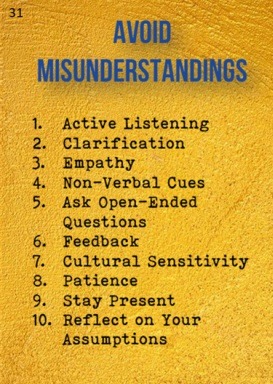
Use this card to practice your communication skills and avoid unnecessary misunderstandings.
- Active Listening:
- Focus on what the other person is saying.
- Avoid interrupting and listen without formulating a response.
- Clarification:
- Ask clarifying questions to ensure you understand their perspective.
- Paraphrase what you’ve heard to confirm your understanding.
- Empathy:
- Put yourself in the other person’s shoes to understand their feelings.
- Acknowledge their emotions and show empathy.
- Non-Verbal Cues:
- Pay attention to body language and facial expressions.
- Consider the tone of voice to gauge emotions.
- Ask Open-Ended Questions:
- Encourage the other person to share more details.
- Open-ended questions promote deeper understanding.
- Feedback:
- Provide feedback to ensure you’ve interpreted their message correctly.
- Confirm your understanding by summarizing key points.
- Cultural Sensitivity:
- Be aware of cultural differences that may affect communication.
- Consider cultural nuances in interpreting messages.
- Patience:
- Avoid rushing the conversation; take your time to understand.
- Patience fosters a more thorough understanding.
- Stay Present:
- Avoid distractions and stay focused on the conversation.
- Being present enhances comprehension.
- Reflect on Your Assumptions:
- Be aware of your own biases and assumptions.
- Challenge preconceived notions to foster better understanding.
ACTIVITY 32 | The Sandwich Communication Strategy

The sandwich technique is a communication strategy that involves sandwiching constructive or negative feedback between positive statements. Here are the three steps:
-
Start with a Positive Opening: Begin the conversation on a positive note. Express appreciation, acknowledge strengths, or highlight something commendable. This sets a friendly tone and helps the recipient feel more receptive.
-
Deliver Constructive Feedback: Once you’ve established a positive atmosphere, address the issue or provide constructive criticism. Be specific, clear, and focus on behaviors rather than making it personal. Offer suggestions for improvement and frame the feedback in a way that encourages growth.
-
End with Encouragement: Conclude the conversation with another positive statement. Reiterate your confidence in the person’s abilities, express support, or highlight their potential. Ending on a positive note helps to maintain goodwill and encourages a forward-looking, solution-oriented mindset.
Remember, the sandwich technique is a valuable tool for delivering feedback effectively while maintaining a respectful and supportive communication environment.
ACTIVITY 33 | S.E.L.F. Strategy

Self-Awareness: This is the foundational step. Being aware of your own emotions and reactions in a conflict is crucial. It allows you to understand how you’re feeling and why, providing a solid starting point for effective communication.
Evaluate Objectively: Once you’re aware of your emotions, it’s time to objectively evaluate the situation. Look at the facts, perspectives, and potential solutions without being overly influenced by emotions. This step helps in gaining clarity and understanding the bigger picture.
Learn from Experience: Every conflict is an opportunity for growth. After the dust settles, reflect on the experience. What worked? What could have been done differently? Learning from each conflict ensures that you continuously refine your communication skills.
Foster Resilience: Life is full of challenges, and conflicts are inevitable. Fostering resilience means developing the ability to bounce back from tough situations. It involves building emotional strength and adaptability, which is crucial for facing future challenges with a positive mindset.
You’ll find the S.E.L.F. strategy useful in various aspects of your personal and professional life. It’s particularly valuable in moments of tension, or disagreement, or when navigating difficult conversations. Whether you’re dealing with clients, colleagues, or personal relationships, having a strong foundation in conflict communication can make a significant difference.
ACTIVITY 34 | The P.E.A.C.E. Strategy

The P.E.A.C.E. strategy is designed to assist individuals in navigating challenging situations by promoting a mindful and deliberate approach to decision-making and emotional regulation. Here’s when and how to use it:
Pause:
- Purpose: To interrupt impulsive reactions and create a moment of stillness.
- When to use: When faced with a stressful or emotionally charged situation, take a moment to pause before responding.
Evaluate:
- Purpose: To assess and understand your emotions and thoughts objectively.
- When to use: After pausing, evaluate your emotional and cognitive responses to gain clarity on the situation.
Accept:
- Purpose: To acknowledge and accept the reality of the situation without judgment.
- When to use: Once you’ve evaluated the situation, practice acceptance by acknowledging it as it is, without denying or exaggerating its nature.
Choose:
- Purpose: To make a conscious and positive choice in response to the situation.
- When to use: After accepting the situation, consider your options and choose a response that aligns with your values and promotes a constructive outcome.
Execute:
- Purpose: To implement the chosen response with intention and commitment.
- When to use: Put your chosen response into action, maintaining focus on your decision while navigating the situation.
The P.E.A.C.E. strategy is particularly valuable in moments of conflict, stress, or uncertainty, providing a structured and mindful approach to handling challenging circumstances. It empowers individuals to respond thoughtfully rather than react impulsively, fostering emotional resilience and effective decision-making.
ACTIVITY 35 | The R.E.S.T. Strategy
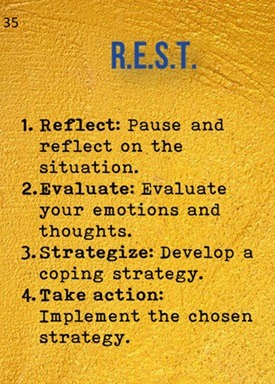
The R.E.S.T. strategy is a structured approach to coping with challenging situations, emphasizing reflection, evaluation, strategic planning, and decisive action. Here’s when and how to use it:
Reflect:
- Purpose: To create a moment of introspection and mindfulness.
- When to use: Pause and reflect when faced with a situation that triggers stress or uncertainty.
Evaluate:
- Purpose: To objectively assess and understand your emotions and thoughts.
- When to use: After reflecting, evaluate your emotional and cognitive responses to gain clarity on the situation.
Strategize:
- Purpose: To develop a coping strategy or plan of action.
- When to use: Once you’ve evaluated the situation, consider different coping strategies or approaches that align with your goals and values.
Take Action:
- Purpose: To implement the chosen coping strategy with intention.
- When to use: Execute the selected strategy, taking deliberate actions to address the situation effectively.
The R.E.S.T. strategy is particularly useful in moments of stress, conflict, or decision-making. It encourages individuals to approach challenges systematically, moving from thoughtful reflection to strategic planning and, ultimately, decisive action. This structured process promotes a balanced and intentional response, fostering resilience and adaptive coping skills.
ACTIVITY 36 | Use F.R.E.E.D.O.M. to break up a toxic relationship

F – Face the Reality:
- Life Coaching Tip: Encourage self-reflection. Help the individual acknowledge and face the reality of the toxic relationship. This involves recognizing negative patterns, the impact on their well-being, and the need for change.
R – Reflect on Boundaries:
- Life Coaching Tip: Guide them in reflecting on their personal boundaries. Discuss what healthy boundaries look like and how they can set and communicate these boundaries effectively.
E – Establish a Support System:
- Life Coaching Tip: Emphasize the importance of a support system. Assist them in identifying friends, family, or professionals who can provide emotional support during and after the breakup.
E – Evaluate the Relationship:
- Life Coaching Tip: Help them evaluate the relationship objectively. Explore the positive and negative aspects, and encourage a realistic assessment of whether the relationship aligns with their values and goals.
D – Detoxify Emotionally:
- Life Coaching Tip: Discuss emotional detoxification. Guide them in processing and releasing emotions, whether through journaling, therapy, or other constructive outlets, to facilitate healing.
O – Open Communication:
- Life Coaching Tip: Assist in planning open and assertive communication. Help them express their feelings and intentions clearly, setting the stage for a respectful and honest conversation with the partner.
M – Make a Plan for the Future:
- Life Coaching Tip: Facilitate goal-setting. Work with them to create a plan for the future, focusing on personal growth, self-care, and the pursuit of fulfilling relationships.
Using the F.R.E.E.D.O.M. framework, individuals can gain clarity, strength, and a sense of direction as they navigate the challenging process of ending a toxic relationship. As a life coach, you provide guidance, support, and tools to empower them to reclaim their lives and move forward with confidence.